
Comparison · 3 min read
Aluminium vs Stainless Steel Profiles
Compare aluminium and stainless steel architectural profiles through application, exposure, finish and specification requirements rather than appearance alone.
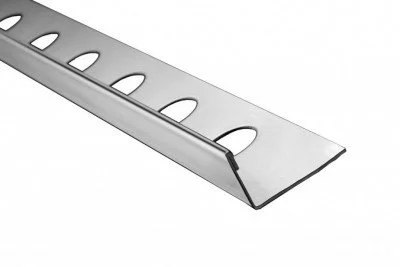
Compare materials only after defining the same architectural detail. A stainless corner guard and an aluminium tile trim are not direct substitutes simply because both finish an edge. Geometry, fixing, exposure and the desired visible surface belong in the comparison together.
A useful material decision should be explainable to the architect, installer and buyer using the same information. Begin with the application, then ask what evidence is needed for each candidate.
Hold the application constant
Write down the junction and the job the profile must perform: finish a tile edge, cover a corner, frame a decorative line or receive another component. Compare section drawings with equivalent coverage and the intended installation method. FIRST METAL has separate aluminium and stainless steel families for several applications, but a comparable name does not prove identical dimensions or accessories. Keep each candidate linked to its own product reference and drawing throughout the review.
Describe exposure instead of asking for a universal winner
Record cleaning products, moisture, expected contact and any unusual chemical environment. DURAL's technical guidance calls for suitability to be assessed against mechanical and chemical exposure. That is a more useful approach than assuming any stainless surface or any coated aluminium section is suitable everywhere. Ask the supplier to confirm the proposed material and finish for the stated conditions. Where a particular grade is required, specify it in the enquiry and request confirmation rather than inferring it from a photograph.
Technical reference: DURAL: DURAPLUS technical information
Compare the finished surface
An aluminium finish sample and a stainless sample may have different colour undertones even when both are described as silver. Brushing direction, polish and lighting also affect the comparison. Review samples beside the adjacent tile or fittings and identify the approved visible faces. Avoid treating a digital colour, a finish name or the words chrome look as proof of identical processing. The Surface Finishes page is an illustrative aluminium selector; stainless finish preferences are handled separately in the enquiry.
Check fabrication, fixing and care
The installer needs instructions for the selected material and assembly, including cutting, protection and cleaning. A tool or cleaning method accepted for one finish may not be suitable for another. Ask which accessories belong to the chosen section and whether the corner treatment changes with the material. Include maintenance responsibility in the handover: cleaning staff need the actual finish information, not only a generic instruction to clean metal. Confirm compatibility with the substrate and adjoining materials before installation.
Make quotations comparable
A lower unit price is difficult to interpret if one quotation includes accessories and the other covers only straight lengths. Compare the same drawings, finishes, supplied quantities and packaging assumptions. State whether you are buying a project schedule or replenishing distributor stock. Request samples before a large appearance-sensitive order and retain the approved reference. Differences in grade, section dimensions or supplied components should be resolved in writing rather than hidden behind the common term profile.
- Application and exposure description.
- Equivalent section drawings and material requirements.
- Physical finish samples and visible-face acceptance.
- Accessories, lengths, quantity, delivery destination and documentation needs.
Choose the stainless steel grade for your project
FIRST METAL offers AISI 201 and AISI 304 options. Select the grade separately from the surface finish. Confirm the supplied grade, section and finish in the quotation and supply documentation.
| Material selection | AISI 201 | AISI 304 |
|---|---|---|
| Material family | Austenitic chromium-manganese-nickel stainless steel | Austenitic chromium-nickel stainless steel |
| Indicative composition by mass | Cr 16–18% · Ni 3.5–5.5% · Mn 5.5–7.5% | Cr 18–20% · Ni 8–10.5% · Mn ≤2% |
| Project positioning | An economical stainless option for suitable interior and decorative applications, following exposure and maintenance assessment. | A widely specified general architectural stainless steel for interior details and other environments assessed for the project. |
| Selection considerations | Lower nickel and higher manganese than 304. Confirm the specified grade rather than treating all low-nickel stainless steels as equivalent. | Established general-purpose corrosion resistance does not make 304 rustproof or universally suitable for marine, chloride-rich or aggressive chemical exposure. |
Composition ranges are indicative grade information, not a certificate for supplied material. Limits depend on the applicable product standard; confirm the order specification and material documentation.
For either grade, assess moisture, chlorides, cleaning chemicals, crevices and maintenance access. Surface finish and fabrication affect performance; appearance alone cannot identify the alloy or establish corrosion resistance.
Specify the required brushed, polished or other surface separately and approve a sample. Remove deposits with an appropriate mild cleaner, rinse and dry; avoid chloride-containing cleaners and carbon-steel contamination. Agree a maintenance schedule suited to exposure.
Discuss your material selectionTechnical references and scope
Frequently asked questions
Is stainless steel always the better choice?
There is no universal answer. Compare the actual section, environment, required appearance, installation and confirmed material specification for the project.
Does FIRST METAL confirm a stainless grade from its images?
No. The stainless records are product-family references. Grade, dimensions and compatibility require confirmation for the ordered product.
Discuss your project detail
Send the profile reference, application, drawings and quantity requirements. Include the points from this guide that need confirmation for your project.
Technical references and scope
Product-specific information comes from the linked FIRST METAL catalogue records. External manufacturer examples explain principles; their dimensions, ratings and compatibility are not transferred to FIRST METAL products.
- DURAL: DURAPLUS technical information
Material suitability under chemical/mechanical exposure and care principles; no grades or certifications transferred.
Products for this detail
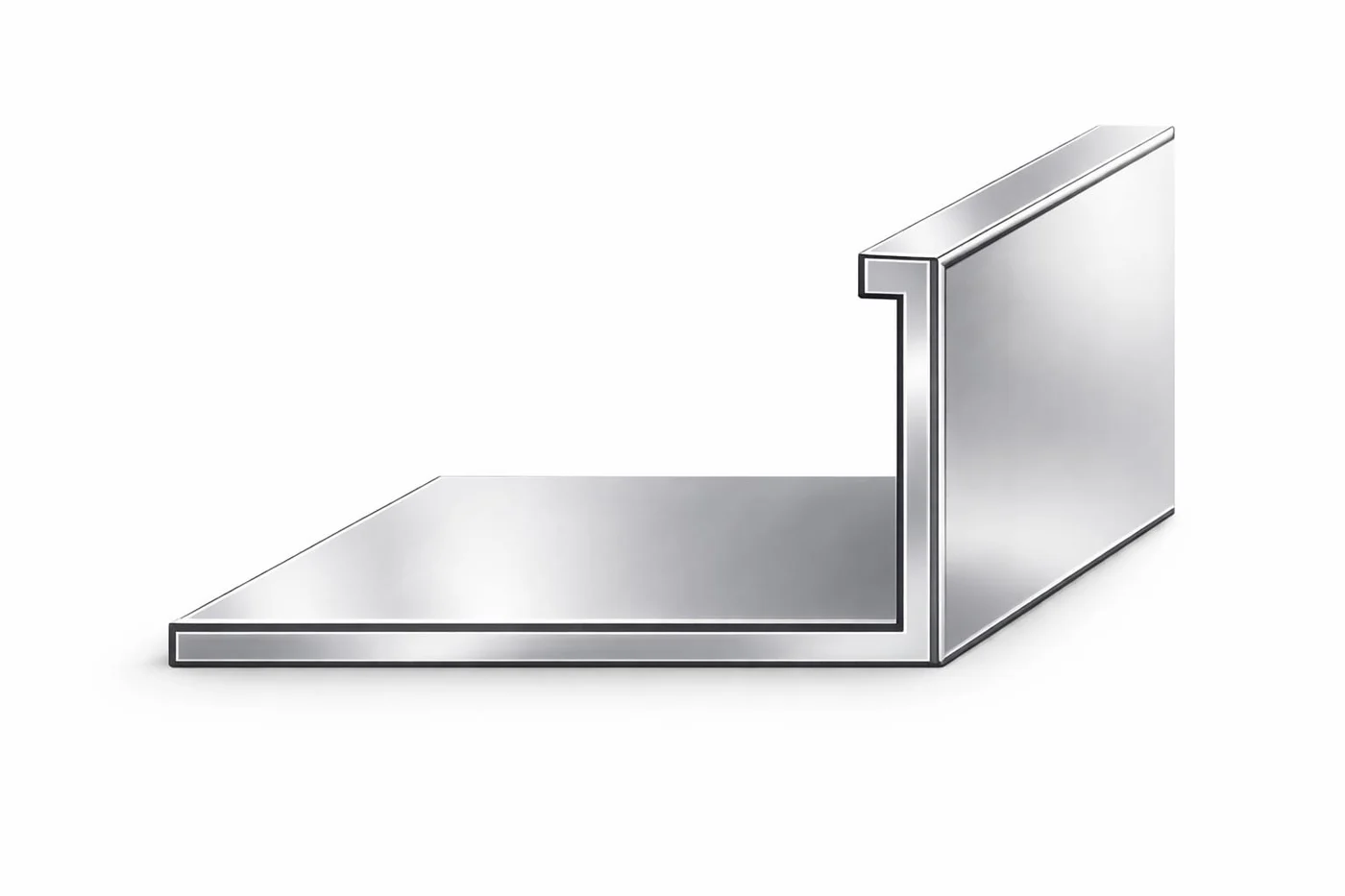
Straight Edge Tile Trim
An L-shaped tile finishing section with an anchoring leg and a straight visible edge. Use the reference to discuss exposed ceramic tile edges and end-corner details.
Enquire about this productStainless Steel Straight Edge Profiles
An upright straight edge and perforated anchoring leg create a defined boundary at exposed tile finishes. This stainless steel family provides a straight-faced alternative to the rounded tile-edge section.
Enquire about this product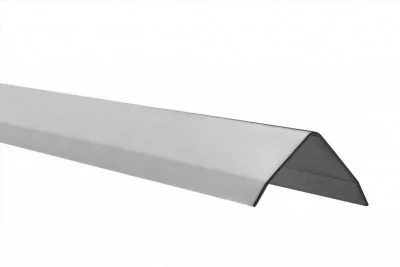
Stainless Steel Corner Protection Profiles
A plain open angle with two visible legs for external wall-corner detailing. The supplied stainless steel section covers the meeting point between surfaces without the perforated anchoring leg of a tile-edge trim.
Enquire about this productContinue reading
Selection guide · 3 min read
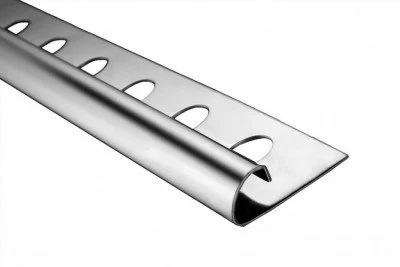
Stainless Steel Profiles and Their Architectural Applications
Explore six stainless steel profile families for edges, corners, stairs, decorative lines and glass/shower details, with a clear specification checklist.
Selection guide · 3 min read
How to Choose the Right Aluminium Tile Trim
Choose aluminium tile trim by tile build-up, visible edge, anchoring detail and environment. Prepare the right information for a specification enquiry.
Comparison · 3 min read
Anodized vs Powder Coated Aluminium
Understand anodizing and powder coating, compare metallic and coated appearance, and specify colour, gloss, texture and physical samples separately.